How to Explain Your Neighborhood on Airbnb (With Examples)
Use a simple framework to describe your Airbnb neighborhood clearly and honestly, with real examples for city, beach, rural, and remote-work stays.
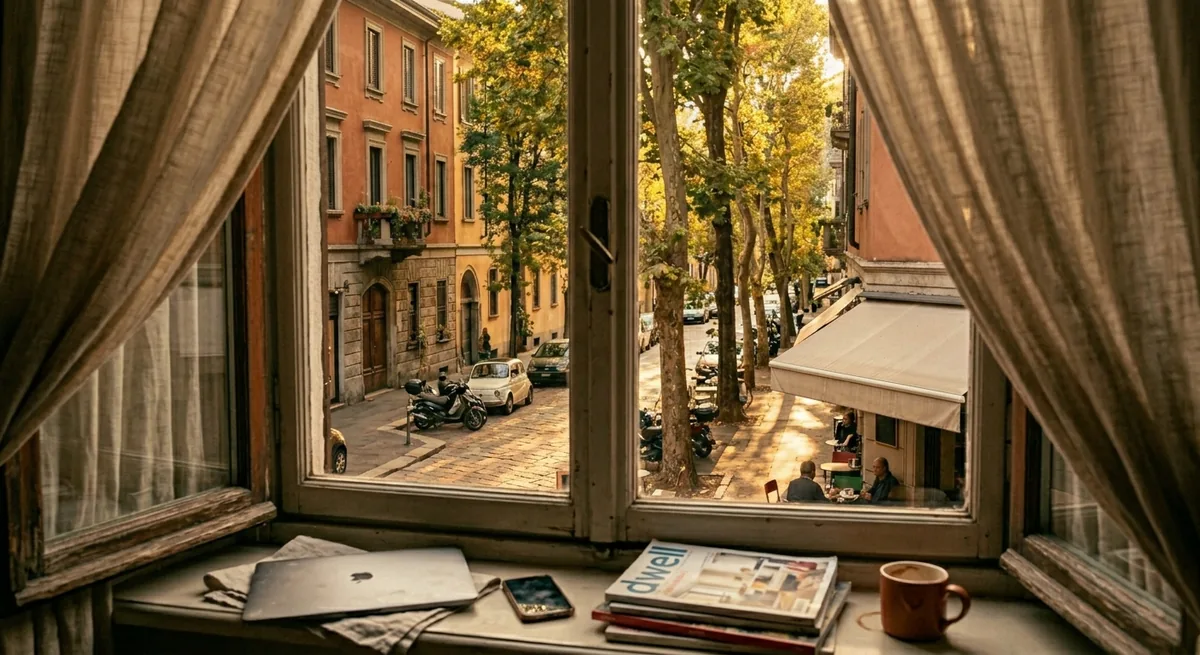
You know your neighborhood so well that you've stopped seeing it. The bakery on the corner, the shortcut to the water, the fact that "downtown" is really a ten-minute drive — it's all obvious to you and invisible to a guest comparing six listings on their phone. That's why so many hosts struggle with how to explain their neighborhood on Airbnb: they either write nothing, or they write the same vague line as everyone else. "Great location close to everything!"
Guests don't book vague. They book when they can picture the trip — where they'll park, where they'll get coffee, how far the thing they came for actually is. The good news: a clear neighborhood description doesn't take talent. It takes a formula.
To explain your neighborhood on Airbnb, cover five things in order: distance to the main draw, the street's vibe, how guests get around, one recognizable landmark, and one honest caveat. Keep it under 150 words, lead with what guests care about most, and back it up with a map or labeled photo.
Here's how to do each piece well, with examples you can adapt.
What guests actually want from a neighborhood description
Before they book, guests are quietly trying to answer four questions:
- How far am I from the reason I'm coming? The beach, the conference center, the in-laws, the trailhead.
- What will it feel like outside the front door? Lively or quiet, walkable or car-first, residential or touristy.
- How do I get around? Do I need a car? Is there parking? Is rideshare reliable at midnight?
- Is there anything I should know before I commit? Stairs, street noise, a gravel road, no corner store for miles.
Notice what's not on the list: adjectives. "Charming," "vibrant," and "hidden gem" answer none of those questions, which is why generic descriptions get skimmed and forgotten. Specifics — minutes, names, distances — are what build booking confidence.
Say your condo is a 12-minute walk from the beach. "Close to the beach" could mean anything from 2 minutes to 25, and a guest who assumes 2 will mention the gap in their review. "A flat 12-minute walk to Crescent Beach — we time it every summer" sets the expectation and sounds like a real person wrote it. Same fact, completely different effect.
A simple neighborhood description formula
Write one sentence for each of these five elements, in this order. That's the whole job.
Distance → Vibe → Transport → Landmark → Caveat
- Distance. Lead with the main draw, in minutes, by the mode guests will actually use. "8 minutes' drive to the ski lifts" beats "near the slopes."
- Vibe. One honest sentence about what the street feels like. Quiet residential block? Bar district that hums until midnight? Say which.
- Transport. How guests get around: free driveway parking, the bus line out front, "you'll want a car here."
- Landmark. Anchor the location to something a stranger can find on a map — a named beach, a university, a famous taco spot. It makes the area feel real and searchable.
- Caveat. One thing you'd want to know before booking. A small, honest caveat reads as trustworthy, filters out the wrong guests, and prevents the surprise that becomes a 3-star review.
A worked version, start to finish: "You're a 6-minute walk from the Riverwalk and 15 from the convention center. The block is quiet and residential — mostly young families and longtime locals. There's a dedicated parking spot, and rideshares arrive in under five minutes. You'll know you're close when you see the old flour mill. One heads-up: the church bells ring at 8 a.m. on Sundays."
Five sentences, under 80 words, and a guest can picture the entire stay.
Neighborhood description examples by stay type
The formula stays the same; the emphasis shifts with why guests are coming. Here's how it plays out for four common property types.
City apartment. Lead with transit and walkability, because urban guests are deciding whether they can skip the rental car. "Two blocks from the Blue Line (12 minutes to downtown), on a tree-lined street that's lively by day and quiet after 10. You won't need a car — there's a grocery store, three cafés, and a pharmacy within a 5-minute walk. Look for the mural on the corner building. Heads-up: street parking is tight if you do drive."
Beach house. Lead with sand-to-door time and be precise — beach guests have been burned by "steps from the ocean" before. "A 4-minute walk on a paved path to Gull Point Beach — no roads to cross with the kids. The street is sleepy: golf carts, beach wagons, and not much else. You'll want a car for groceries; the nearest big store is a 15-minute drive. The lighthouse at the point makes a great sunset walk. Note: no lifeguard on this stretch."
Rural cabin. Here the caveat does the heavy lifting, because the wrong expectations hurt most. "Twenty minutes from the trailheads at Pine Hollow and 30 from town — this is a true unplug spot. Expect deer in the meadow at dusk and total quiet at night. You'll need a car, and the last half-mile is well-maintained gravel. Cell service is spotty, but the Wi-Fi is solid. Stock up on groceries before you head up."
Remote-work stay. Lead with the workday, not the weekend. "A 10-minute walk to Main Street's coffee shops and lunch spots, on a quiet block where daytime calls won't be interrupted. Fiber internet, a dedicated desk, and a co-working space 5 minutes away if you want a change of scene. The clock tower is your landmark. Weekends, the farmers market sets up two blocks over — pleasant, not noisy."
Steal the structure, swap in your facts, and you're done in fifteen minutes.
Back the words up with a visual map
Even a great written description asks guests to do the work of imagining geography. A simple visual — your property pinned alongside the beach, the train stop, the grocery store, with walk times labeled — answers the same questions in about three seconds, and it works for the many guests who skim instead of read.
You can build one with a neighborhood map generator: drop your address, pick the points of interest that match your description, and add the image to your listing photos. Pairing the map with the formula above means guests get the story twice — once in words, once at a glance. (Where the map goes in your photo lineup matters too; see our guide to Airbnb photo order for the best slot.)
For the bigger picture on surfacing location value — what to show, where, and how it affects bookings — start with how to show guests what's near your Airbnb.
Rewrite your location section this week
Here's a concrete next step you can finish tonight:
- Open your listing's location description and delete every adjective doing no work ("great," "amazing," "convenient").
- Write the five formula sentences: distance, vibe, transport, landmark, caveat. Use real minutes and real names.
- Read it out loud. If a stranger couldn't sketch your block from it, add one specific and cut one generality.
- Add a labeled map image so skimmers get the same story visually.
A clear location section won't just earn more bookings — it earns the right bookings, from guests whose expectations match reality. That's where 5-star reviews come from. For the full playbook on setting expectations before and during the stay, grab the free 5-Star Guest Experience guide.
Free Tool
Put your location on a map guests get.
You've done the writing — now turn your location section into a visual map guests understand in seconds.
Generate Your Listing Map